Paradigm shift in medicine and in clinical reasoning method: time has come for a new chest semiotics
Three pillars are enough
Keywords:
clinical reasoning method, semiotics, Chest ultrasonography, Lung UltrasoundAbstract
Introduction: Clinical reasoning in medicine is a complex cognitive process that integrates sensory perception, interpretation, and abductive inference to develop diagnostic hypotheses. Despite the rise of artificial intelligence, the patient-clinician encounter remains rooted in semiotics and a probabilistic approach driven by Bayesian updating. In this context, medical knowledge is viewed as context-dependent and subject to continuous revision based on new clinical signs.
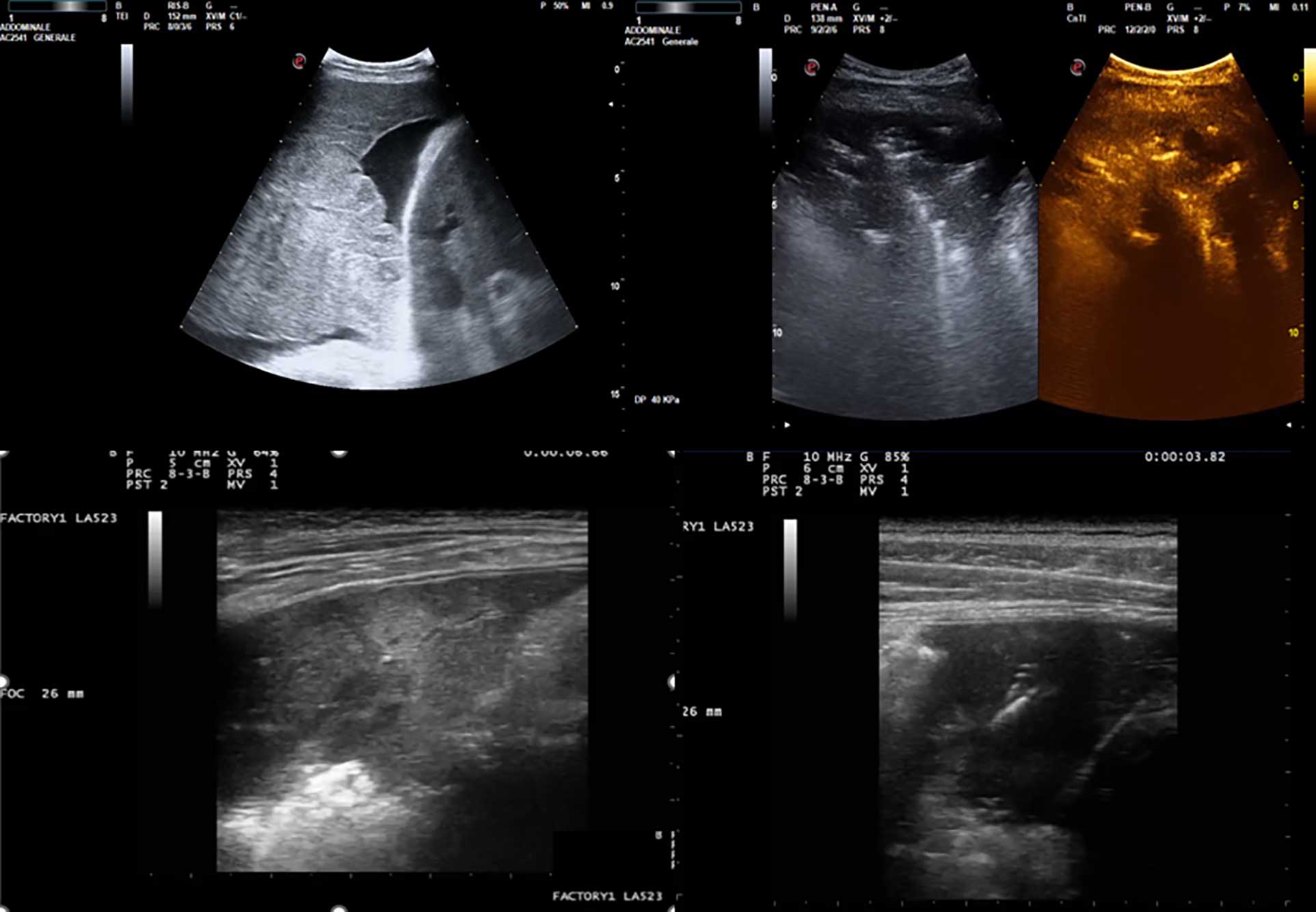
Main body: This paper identifies bedside ultrasonography as a transformative “epistemic mediator” that enhances traditional semiotics by uncovering subtle clinical signs often missed by conventional inspection, palpation, percussion, and auscultation. In managing respiratory diseases, ultrasound provides direct, contextualized data that refines the interpretation of findings such as dullness, altered fremitus, and crackles by linking them to specific anatomical correlates. Based on these principles, the AdET-CHEPHEUS initiative proposes a new paradigm for chest physical examination centered on three pillars: 1) Visual inspection; 2) Auscultation integrated with ultrasound; 3) Palpatory ultrasound evaluation
Conclusion: By replacing traditional percussion with more informative and reproducible ultrasound-based methods, this model aligns modern technology with classical clinical epistemology. The integration of ultrasound into bedside reasoning represents a vital evolution in chest semiotics, preserving the human element of the diagnostic process while increasing accuracy.
References
1. Ierodiakonou K, Vandenbroucke JP. Medicine as a stochastic art. Lancet 1993;341: 542-3.
2. Tikhomirov L, Semmler C, McCradden M, Searston R, Ghassemi M, Oakden-Rayner L. Medical artificial intelligence for clinicians: the lost cognitive perspective. Lancet Digit Health 2024;6 e589-94.
3. Fenton R. What is the place for philosophy within the field of medicine? A review of contemporary issues in medical ethics. Philos Ethics Humanit Med 2018;13:16.
4. Bender M. Working Chance: Peirce's Semiotic Contrasted With Benner's Intuition and Illustrated Through a Semiosis of a Novel Event in the Context of Nursing. Nurs Inq 2025;32(1):e12693
5. Pietarinen AV, Stanley DE. The logic of medical reasoning: toward an integrated inductive, deductive, and abductive approach to clinical practices. Philos Ethics Humanit Med 2025;20(1):16.
6. Kilstrup M. Naturalizing semiotics: The triadic sign of Charles Sanders Peirce as a systems property. Prog Biophys Mol Biol 2015;119(3):563-75.
7. Bours MJI. Bayes rule in diagnosis. J Clin Epidemiol 2021;131:158-60.
8. Stanley DE, Nyrup R. Strategies in abduction. Generating and selecting diagnostic hypothesis. J Med Phylos 2020;45: 159-78.
9. Soldati G, Smargiassi A, Mariani AA, Inchingolo R. Novel aspects in diagnostic approach to respiratory patients: is it the time for a new semiotics? Multidiscip Respir Med 201727;12:15. doi: 10.1186/s40248-017-0098-z. PMID: 28670453; PMCID: PMC5485552.
10. Magnani L. Abductive reasoning: philosophical and educational perspectives in medicine. In: Evans DA, Patel VL, editors. Advanced models of cognition for medical training and practice. Berlin: Springer; 1992.
11. Thagard P. Abductive inference: from philosophical analysis to neural mechanisms. In: Heit E, editor. Inductive reasoning: cognitive, mathematical and neuroscientific approaches (Feeney A. Cambridge: Cambridge University Press; 2006.
12. Karlsen B, Hillestad TM, Dysvik E. Abductive reasoning in nursing: Challenges and possibilities. Nurs Inq 2021;28(1):e12374. doi: 10.1111/nin.12374. Epub 2020 Jul 21. PMID: 32691928.
13. Dossena R, Magnani L. Epistemic Mediators and Chance Morphodynamics.” 2002.
14. Magnani L. Thinking through doing, external representations in abductive reasoning. London: Imperial College; 2002.
15. Magnani L. Basic Science Reasoning and Clinical Reasoning Intertwined: Epistemological Analysis and Consequences for Medical Education. Adv Health Sci Educ Theory Pract 1997;2(2):115-130. doi: 10.1023/A:1009736414434. PMID: 12386403.
16. Thagard PR. The best explanation: Criteria for theory choice. J Philos 1978;75:6–92. doi: 10.2307/2025686.
17. Magnani L. Abduction, Reason, and Science. New York: Processes of Discovery and Explanation, Kluwer Academic/Plenum Publishers; 2001.
18. Stanley DE, Compos DG. The logic of medical diagnosis. Perspect Biol Med 2013;56:300–315. doi: 10.1353/pbm.2013.0019.
19. Tversky A, Kahneman D. Judgment under uncertainty. Heuristics and biases. Science 1974;185:1124–31. doi: 10.1126/science.185.4157.1124.
20. Barash M, Nanchal RS. Enhancing Analytical Reasoning in the Intensive Care Unit. Crit Care Clin 2022;38(1):51-67. doi: 10.1016/j.ccc.2021.09.001. PMID: 34794631.
21. Coltheart M, Davies M. How unexpected observations lead to new beliefs: A Peircean pathway. Conscious Cogn 2021;87:103037. doi: 10.1016/j.concog.2020.103037. Epub 2020 Dec 1. PMID: 33276264.
22. Sebeok TA. Simptom sign, in: Sebeok TA. Signs: An introduction to Semiotics. Toronto: University of Toronto Press; 2001: 65–76.
23. Burnum JF. Medical diagnosis through semiotics. Giving meaning to the sign. Ann Intern Med 1993;119(9):939-43. doi: 10.7326/0003-4819-119-9-199311010-00012. PMID: 7692781.
24. Loudon RG. The lung exam. Clin Chest Med 1987;8(2):265-72. PMID: 3621875.
25. Narula J, Chandrashekhar Y, Braunwald E. Time to Add a Fifth Pillar to Bedside Physical Examination: Inspection, Palpation, Percussion, Auscultation, and Insonation. JAMA Cardiol 2018;3(4):346-50. doi: 10.1001/jamacardio.2018.0001. PMID: 29490335.
26. Yernault JC, Bohadana AB. Chest percussion. Eur Respir J 1995;8(10):1756-60. doi: 10.1183/09031936.95.08101756. PMID: 8586135.
27. Torres[VC5.1][AS5.2]-Macho J, Aro T, Bruckner I, Cogliati C, Gilja OH, Gurghean A, et al. Point-of-care ultrasound in internal medicine: A position paper by the ultrasound working group of the European federation of internal medicine. Eur J Intern Med. 2020; 73:67-71.
28. Ultrasound Guidelines: Emergency, Point-of-Care, and Clinical Ultrasound Guidelines in Medicine. Ann Emerg Med. 2023; 82(3):e115-e155.
29. Jarman RD, McDermott C, Colclough A, et al. EFSUMB Clinical Practice Guidelines for Point-of-Care Ultrasound: Part One (Common Heart and Pulmonary Applications) LONG VERSION. Ultraschall Med. 2023; 44(1):e1-e24.
30. Ceriani E, Schiavon R, La Cava L, Ruscitti C, Cogliati C. Point of care ultrasound: focus on evidence for a critical appraisal. Eur J Intern Med. 2025; 141:106376.
31. Soni NJ, Schnobrich D, Mathews BK, Tierney DM, Jensen TP, Dancel R, et al. Point[VC6.1][AS6.2]-of-Care Ultrasound for Hospitalists: A Position Statement of the Society of Hospital Medicine. J Hosp Med. 2019; 2; 14:E1-E6.
32. Karches K. Hermeneutics as impediment to AI in medicine. Theor Med Bioeth 2025;46:31.
33. Ayres JRCM. Gadamer, Habermas and Ricoeur: Toward a Hermeneutic Philosophy of Care. Nurs Philos 2025;26(4):e70049. doi: 10.1111/nup.70049. PMID: 41118547; PMCID: PMC12539786.
34. Walsh K. Philosophical hermeneutics and the project of Hans Georg Gadamer: implications for nursing research. Nurs Inq 1996;3(4):231-7. doi: 10.1111/j.1440-1800.1996.tb00046.x. PMID: 9117772.
35. Ginzburg C. Morelli, Freud and Sherlock Holmes: clues and scientific method. Hist Workshop 1980;9:5-36. doi: 10.1093/hwj/9.1.5. PMID: 11615846.
36. Moore-McCann B. Medical semiotics; its influence on art, psychoanalysis and Sherlock Holmes. J Med Biogr 2016;24(4):468-74. doi: 10.1177/0967772014533053. Epub 2014 Jul 1. PMID: 24986397.
37. Moore-McCann B. Medical semiotics; its influence on art, psychoanalysis and Sherlock Holmes. J Med Biogr 2016;24(4):468-74. doi: 10.1177/0967772014533053. Epub 2014 Jul 1. PMID: 24986397.
38. Carson D. The abduction of Sherlock Holmes. Int J Police Sci Manag 2009;11:193–202. doi: 10.1350/ijps.2009.11.2.123.
39. Roberts RM. Serendipity: Accidental Discoveries in Science. New York: John Wiley & Sons, Inc; 1989.
40. Remer TG. Serendipity and the Three Princes, from the Peregrinaggio of 1557. 1st edition. Norman: University of Oklahoma Press; 1964.
41. Yernault JC, Bohadana AB. Chest percussion. Eur Respir J 1995t;8(10):1756-60. doi: 10.1183/09031936.95.08101756. PMID: 8586135.
42. McGee SR. Percussion and physical diagnosis: separating myth from science. Dis Mon 1995;41(10):641-92. doi: 10.1016/s0011-5029(95)90098-5. PMID: 7555568.
43. Smargiassi A, Zanforlin A, Perrone T, Buonsenso D, Torri E, Limoli G, et al. Vertical Artifacts as Lung Ultrasound Signs: Trick or Trap? Part 2- An Accademia di Ecografia Toracica Position Paper on B-Lines and Sonographic Interstitial Syndrome. J Ultrasound Med 2023;42(2):279-92.
44. Inchingolo R, Zanforlin A, Buonsenso D, Perrone T, Torri E, Limoli G, et al. Lung Ultrasound Signs: The Beginning. Part 3-An Accademia di Ecografia Toracica Comprehensive Review on Ultrasonographic Signs and Real Needs. J Ultrasound Med 2024;43(4):629-41. doi: 10.1002/jum.16397. Epub 2024 Jan 3. PMID: 38168739.
45. Soldati G, Smargiassi A, Demi L, Inchingolo R. Artifactual Lung Ultrasonography: It Is a Matter of Traps, Order, and Disorder. Appl. Sci 2020;10:1570.
46. Soldati G, Smargiassi A, Perrotta A, Pierro G, Barone R, Carriera L, et al. An update on the role of ultrasound lung artifacts in the diagnosis of respiratory diseases. Expert Rev Respir Med 2025;14:1-10.
47. Smargiassi A, Inchingolo R, Calandriello L, Lombardi F, Calabrese A, Siciliano M, et al. Possible role of chest ultrasonography for the evaluation of peripheral fibrotic pulmonary changes in patients affected by idiopathic pulmonary fibrosis-pilot case series. Appl Sci 2020;10:1617.
48. Demi L, Wolfram F, Klersy C, De Silvestri A, Ferretti VV, Muller M, et al. New International Guidelines and Consensus on the Use of Lung Ultrasound. J Ultrasound Med 2023;42(2):309-44.
49. Perpenti M, Mento F, Pierro G, Perrotta A, Perrone T, Smargiassi A, et al. Fully automated Quantitative Lung Ultrasound spectroscopy for the differential diagnosis of lung diseases: The first multicenter in-vivo clinical study. Comput Biol Med 2026;200:111365.
50. Radovanovic D, Zanforlin A, Smargiassi A, Cinquini S, Inchingolo R, Tursi F, et al. CHEst PHysical Examination integrated with UltraSound - Phase (CHEPHEUS1). A survey of Accademia di Ecografia Toracica (AdET). Multidiscip Respir Med 2025;20(1):1020. doi: 10.5826/mrm.2025.1020. PMID: 40372277; PMCID: PMC12092075.
51. Zanforlin A, Smargiassi A, Carlucci P, Radovanovic D, Inchingolo R, Tursi F, et al. Chest PHysical exam with UltraSound (CHEPHEUS) part 2. A pilot study. Eur Respir J 2024;64(suppl 68):PA3442.
Downloads
Published
Issue
Section
License
Copyright (c) 2026 The Author(s)

This work is licensed under a Creative Commons Attribution-NonCommercial 4.0 International License.
Mattioli 1885 has chosen to apply the Creative Commons Attribution NonCommercial 4.0 International License (CC BY-NC 4.0) to all manuscripts to be published.
How to Cite